When it comes to carbon-plated racing shoes dominating recent running circles, the Li-Ning Feidian 6 series sits squarely at the center of the conversation. With Japanese marathon star Suguru Osako frequently lacing them up since signing with Li-Ning, many dedicated runners have been asking the same question: between the aggressive flagship Li-Ning Feidian 6 ULTRA and the Li-Ning Feidian 6 ELITE—a model Osako himself reportedly favors and wears extensively in training—what is the real difference underfoot?
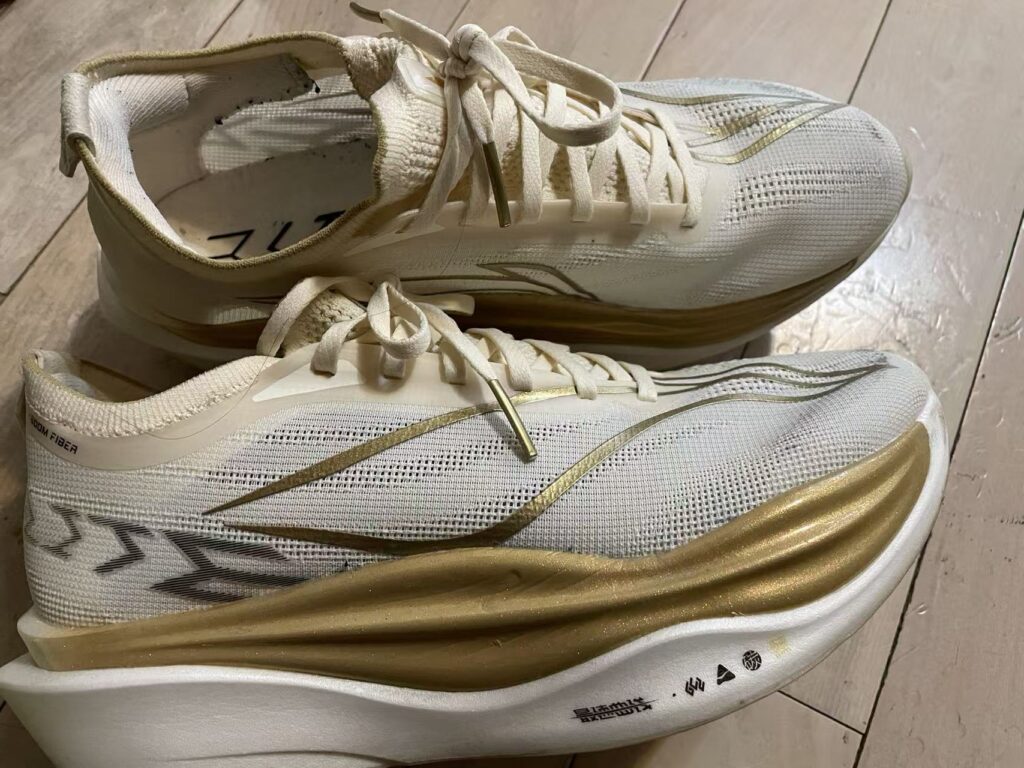
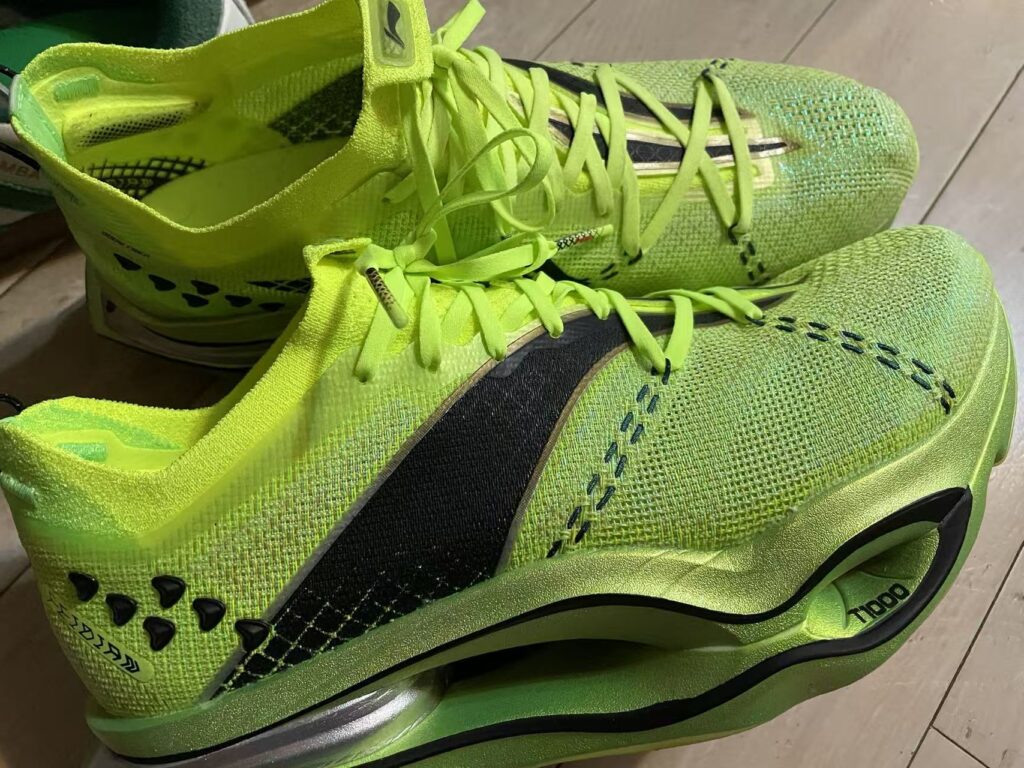
For runners logging consistent mileage who burn through a pair of trainers every three to four months, shoe rotation economics is a very real equation. Over the past few years, I have rotated through the Nike Vaporfly, Adidas Boston, and ASICS Metaspeed. At starting prices north of $220 USD per pair, using Western super shoes as daily workhorses quickly becomes financially unsustainable.
Last month, I walked into a Li-Ning flagship store and bought both the Feidian 6 ELITE (in the Honor Gold/White colorway) and the top-tier Feidian 6 ULTRA. Interestingly, the ELITE (retailing at ~$180 USD) was only 10% off, while the ULTRA (retailing at ~$320 USD) was discounted by nearly 50% despite having full size availability—meaning I paid virtually the exact same price for both.
Thinking I had scored a top-spec super shoe for the price of a tier-two racer, I took both pairs to the track for 800m interval testing. What followed was a humbling lesson: there is a reason Suguru Osako likes running in the ELITE. In the running shoe market, a non-clearance 50% discount rarely signals a hidden bargain—it signals a steep biomechanical barrier to entry.
Table of Contents
1. Static Feel & Upper Construction: Identical Comfort, Different Souls
Setting the two shoes side by side—aside from the colorways (my Honor Gold/White ELITE versus the neon volt ULTRA)—the last geometry, heel collar padding, and breathable BOOM FIBER upper feel virtually identical.
The true dividing line lies entirely in the midsole architecture:
- Feidian 6 ULTRA: Features Li-Ning’s signature dual-arch cutout structure (“Li-Ning Jiang”) in the forefoot paired with a high-rigidity, full-length spoon-shaped T1000 carbon plate.
- Feidian 6 ELITE: Eliminates the forefoot cutout in favor of a continuous, thick slab of full-length Super Boom foam housing a full-length carbon plate.
2. 800m Track Interval Test: Kinetic Chain Energy Loss
Expecting the higher-spec ULTRA to give me an edge on speed work, I laced it up for an 800m interval session.
Reality hit fast—I pulled the plug after just three reps.
It wasn’t a cardiovascular bottleneck. My heart rate stayed steady around 152 bpm and my breathing felt completely controlled, yet my pace stalled at 4:19–4:50/km, and my legs felt unusually labored.
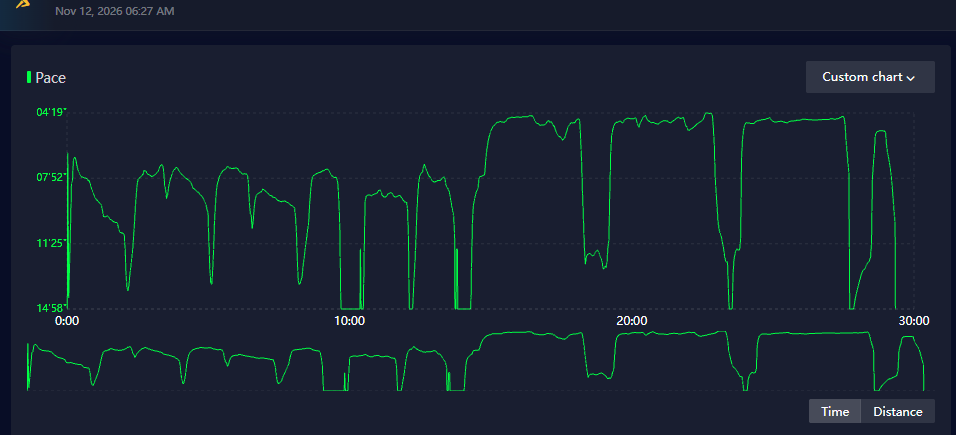
The culprit? While the ULTRA feels explosively bouncy when bouncing on the spot, the dual forefoot cutouts introduce micro-instability upon impact at speed. To stabilize that lateral wobble, my plantar fascia and soleus muscles had to spend an extra fraction of a second “locking” the platform before transitioning into toe-off. Even a 0.1 to 0.2 millisecond delay disrupts the rigid energy transfer along the lower-limb kinetic chain. I experimented with different foot-strike patterns, but the energy-bleeding sensation remained. After three reps, I aborted the intervals and jogged out the rest of the session at an easy pace.
The very next day, I put on the Feidian 6 ELITE for the exact same workout: 8 × 800m.
My heart rate hovered around the exact same 150 bpm mark, yet my running economy was night and day. The first three reps clicked off effortlessly at 4:16–4:21/km with a smooth, natural rocker transition, and I closed out the final rep at 4:01/km feeling completely relaxed. The supposed “step-down” ELITE has since become the most frequently worn workhorse in my rotation.
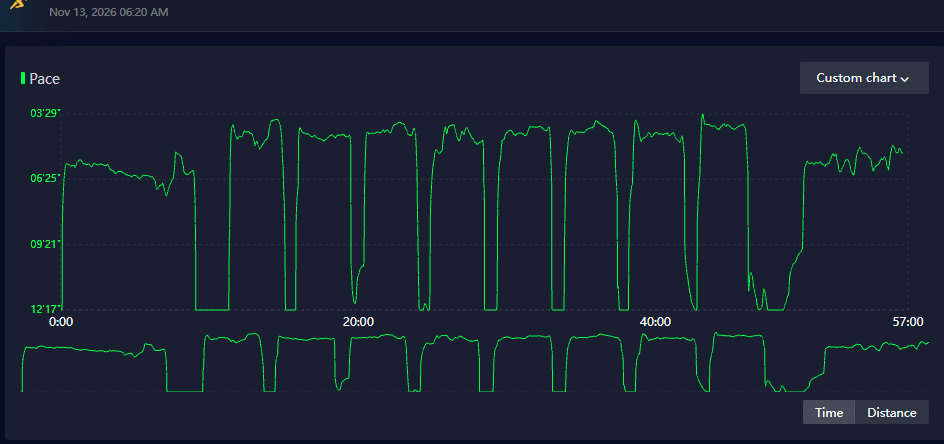
This explains why the ULTRA is heavily discounted even in full-size runs: a high-rigidity T1000 plate combined with an aggressive cutout geometry requires elite ground contact times and massive vertical ground reaction forces (typically sub-2:50 marathoners or sub-3:30/km paces) to hit its sweet spot. Without that level of neuromuscular stiffness, flagship tech turns into dead weight.
3. Cross-Brand Comparison: Anta G9 (1st Gen) vs. Li-Ning Feidian 6 ELITE
Speaking of high-value daily trainers, it is worth comparing the ELITE against my previous go-to mileage shoe: the Anta Champion Running Shoe Gen 1 (Anta G9).
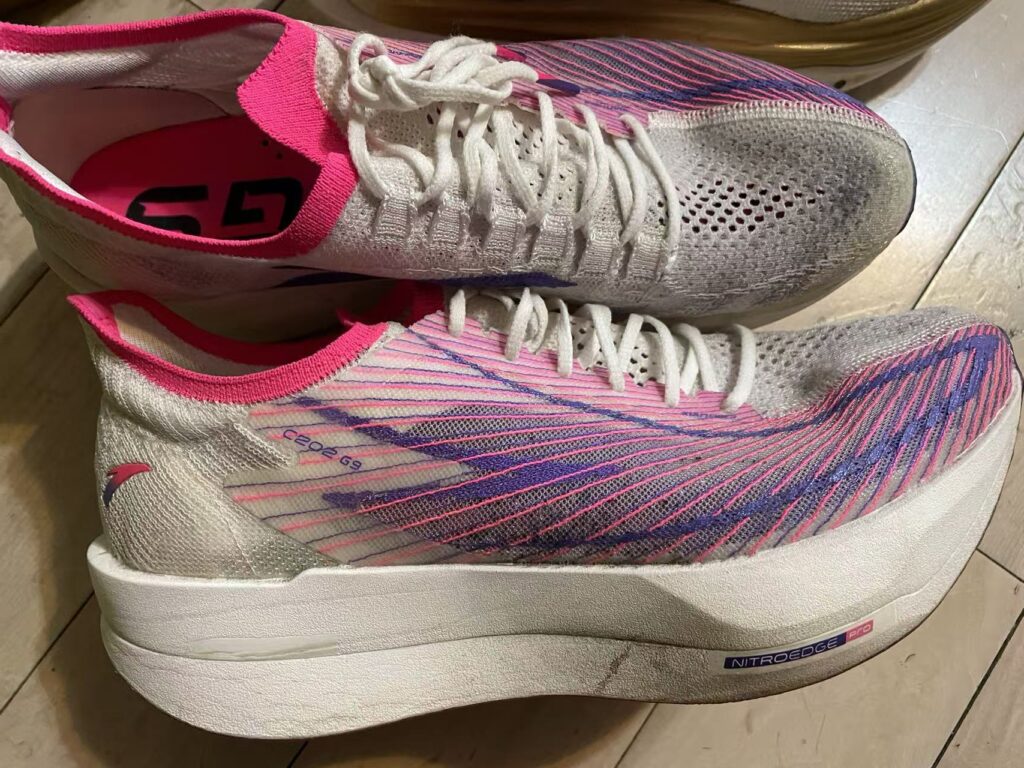
Switching from the Anta G9 to the Feidian 6 ELITE highlights three distinct trade-offs:
- Stack Weight vs. Cushioning: Coming directly from the Anta G9, the ELITE initially feels slightly more substantial underfoot (even though the ELITE is actually lighter on the scale, its high-stack Super Boom midsole and plate give it a denser physical presence). However, the deep impact protection and forgiveness the ELITE delivers more than justify that sensation.
- Pricing & Durability: Retailing at ~$110 USD, the Anta G9 Gen 1 famously almost never goes on discount. The reason is simple: its price-to-durability ratio and all-around stability leave zero flaws for daily training.
- Role in the Rotation: The ELITE costs a step more than the G9, but it returns noticeably higher propulsion and speed feedback. If I am toeing the starting line on race day, I am reaching for the Feidian 6 ELITE over the G9 every time.
4. Verdict & Shoe Rotation Recommendations
Chinese running brands have reached a level of foam chemistry and build quality that easily rivals top Western brands for high-mileage training. If you are building a cost-effective training and racing rotation, here is how these three stack up based on retail pricing and real-world performance:
- Daily Aerobic Mileage & Long Slow Distance (LSD): Anta G9 Gen 1 (Retail: ~$110 USD). Stable, virtually indestructible, and reasonably priced—an effortless mileage eater.
- Tempo Runs, Intervals & Race Day: Li-Ning Feidian 6 ELITE (Retail: ~$180 USD; street/sale price ~$90–$135 USD). Balances plush cushioning with a smooth, propulsive ride. Forgiving, accessible, and easily the highest value-for-money pick for serious amateur runners.
- Li-Ning Feidian 6 ULTRA (Retail: ~$320 USD; street/sale price ~$160–$230 USD): Skip. Unless you possess elite-level lower-leg stiffness and ultra-short ground contact times, do not let a 50% discount tempt you. It is a specialized track/road weapon built for the top 1%, not a daily trainer.
Performance Comes From the Runner, Not the Most Expensive Shoe
No carbon plate can compensate for missing aerobic fitness or muscular endurance. Real breakthroughs come from structured training calibrated to your current physiology. Use PaceShaper to dynamically adjust your workouts around your true VDOT fitness and recovery—build the engine first, and let your gear act as the multiplier.
Build Your Adaptive Plan on PaceShaper →
“Julian (J. Faulkner) — Marathon runner, long-term investor, and independent builder.
Leave routine to code, return people to judgment & life.
— AI-adaptive marathon training scheduler powered by VDOT pacing equations
— Historical dividend yield percentile & return distribution analyzer for income investors
— Automated dashboard tracking Federal Reserve bank reserves & macro liquidity cycles